
Degenerative disc disease, also called DDD, is a term that refers to the anatomical changes of the spinal segments that occur from degeneration, or “osteoarthritis,” of the spine caused by injuries, aging and the effects of gravity. By the time we reach our mid-30s, almost a third of people will show some evidence of it. By 60, more than 90% of us have some disc degeneration.
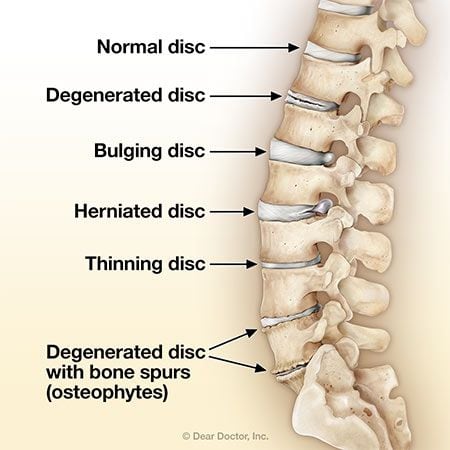
As we age, the rubbery discs that cushion the spinal vertebrae can dry out, thin or even tear—or the gel-like core may bulge through the outer portion of the disc. Any of these changes can cause pain, inflammation and reduced mobility, and can impinge on the delicate nerves that exit the spine. Although many people have no symptoms of degenerative disc disease for a long time, it’s likely that as the condition advances, there may be pain—much like a cavity that starts in the tooth without any noticeable discomfort until it has advanced considerably. Chiropractors can help relieve the pain that may eventually accompany degenerative disc disease and help keep your spine flexible and functioning.
Characteristics of Degenerative Disc Disease
Degenerative disc disease most commonly occurs in the lumbar (lower back) region, which bears most of the body weight, but it can also develop in the cervical spine (neck) and the thoracic spine (upper back).
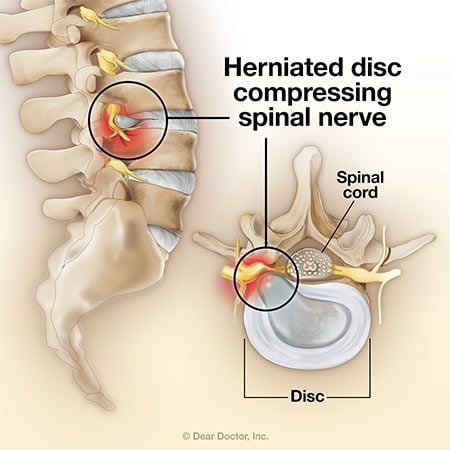
The disc has a gel-like inner core surrounded by an outer ring. The inner part is about 80% water, but as it dries out over time it becomes less flexible (it’s also why we get shorter as we age). This puts more stress on the outer part of the disc, which can make it bulge and press against sensitive nerves. Sometimes the inner part of the disc pushes through a tear in the disc wall and touches nearby nerves. The gel contains inflammatory proteins that can irritate the nerves and surrounding structures.
The body may respond to the thinning of discs by developing bony growths called bone spurs, which can interfere with nerve transmission. They don’t always cause trouble, but in some rare cases they take up room in the spinal canal needed by the spinal cord and surrounding nerves. If the nerves in the spine become compressed (pinched), you can develop pain, weakness and/or numbness in the arms or legs.
While many people with DDD do not have pain or symptoms at all, most people with spine-related pain will have signs of DDD. When symptoms are present, they vary depending on the cause and location: Many people feel a dull ache, while others have sharp or even burning pain. The pain may extend down to the buttocks and legs, which is called sciatica.
With DDD, sitting usually causes the most pain because it puts more weight on your discs and surrounding structures. Standing for long periods of time, especially on hard surfaces, can be difficult. Activities such as bending or twisting can make your pain worse, while lying down tends to relieve it, as can walking.
Chiropractic Treatment of DDD
Of the 22 million people who see a chiropractor each year, about a third of them go for back pain, and many of those people have degenerative disc disease. Chiropractors can help your back feel and move better. Chiropractic therapies can soothe irritated spinal nerves and help improve joint mechanics.
Chiropractors use different kinds of techniques, including:
- Spinal manipulation: a precise and controlled thrust on joints that lack mobility or show abnormal motion.
- Flexion-distraction: a gentle type of spinal manipulation that uses a non-thrusting technique and specialized table, usually employed for herniated discs and spinal stenosis, the narrowing of the spinal canal.
- Instrument-assisted manipulation: a gentle pinpoint force applied using a handheld instrument.
- Trigger point therapy: applying direct pressure to painful points (knots) in the muscles to relieve tension.
Chiropractors also use tools to reduce inflammation, including:
- Interferential electrical stimulation: a low-frequency electrical current that stimulates your muscles, reducing inflammation.
- Ultrasound: sound waves sent deep into your muscles to create mild heat that helps reduce spasms, stiffness and pain—and also enhances circulation.
Chiropractors may recommend exercises to bolster in-office treatment and help prevent disease progression.
Degeneration cannot be reversed, and serious chronic cases of disc degeneration disease may need surgical intervention. If the degeneration is too advanced, chiropractors will assist in making the right referral.
What You Can Do
Taking good care of your spine and muscles can slow down and even help prevent the degeneration process. Just as you practice good dental hygiene and have regular dental checkups to prevent cavities, you can practice good “spinal hygiene” to avoid DDD. Seeing your chiropractor regularly and avoiding a sedentary lifestyle can help reduce or prevent DDD—movement is key to maintaining a healthy spine! Also, during a chiropractic evaluation, Chiropractors may be counted on to catch DDD in its early stages before it produces major symptoms.
If you’re concerned about DDD, chiropractors can help. Keep in mind that chiropractic visits are important even when you don’t have symptoms because they can catch problems you may not realize are there and stave off future problems.